
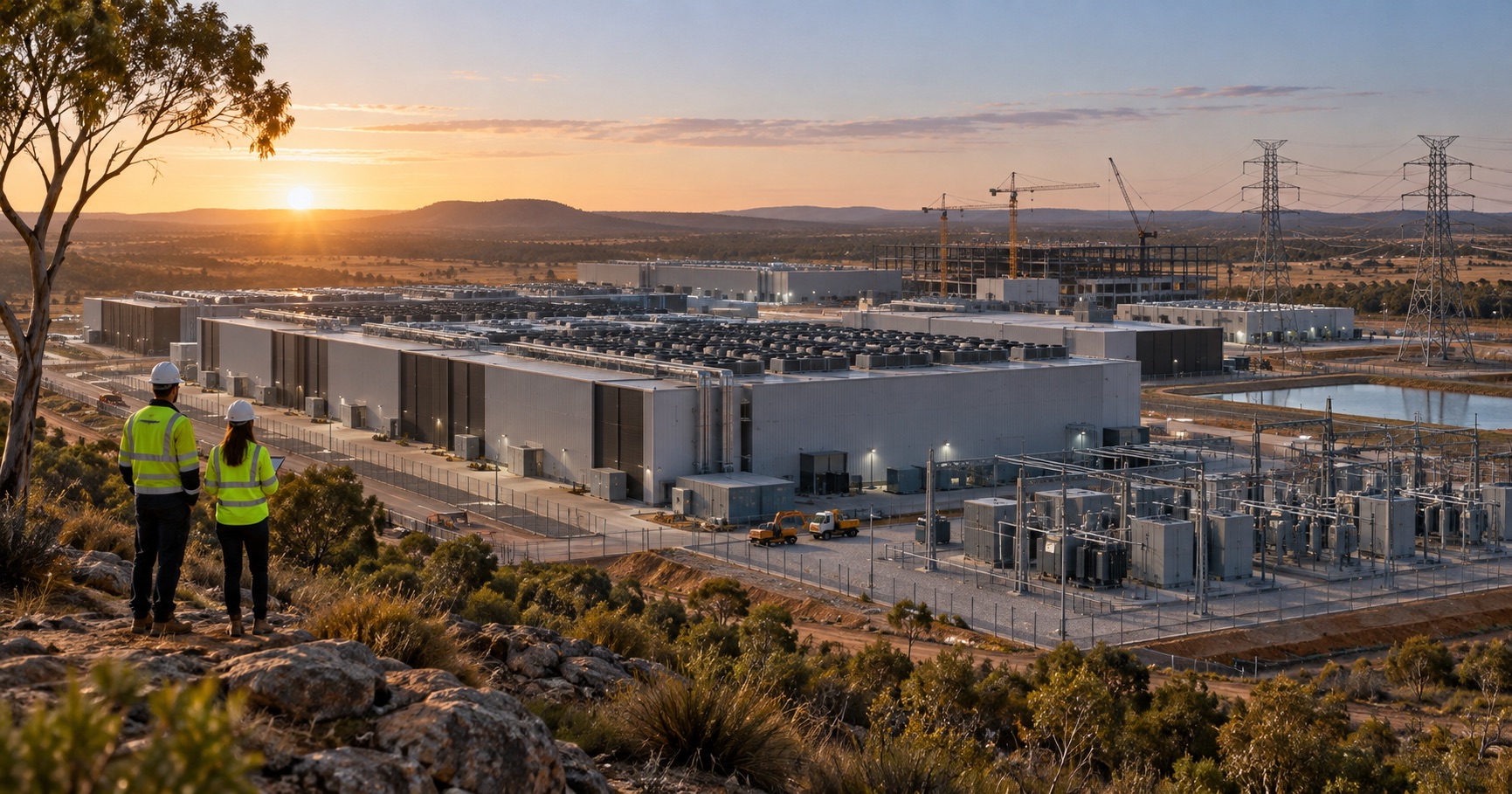
Firmus is preparing to test investor appetite for one of the most capital-intensive technology infrastructure stories to reach the Australian market, as demand for AI data centres continues to reshape funding needs across the sector.
The company’s planned IPO is expected to raise $US5 billion, with offer costs estimated at $US190 million, or $266 million. Those costs include bankers’ and lawyers’ fees, listing expenses, marketing and other requirements linked to the float.
Before the IPO, Firmus had already secured substantial pre-listing support, including $US3 billion in equity and a $US10 billion debt package from Blackstone.
The larger funding challenge comes after the float. Firmus has told potential investors that building and fitting out the sites already under way, which underpin its targeted $US5 billion EBIT by the end of FY28, is expected to cost $US37 billion.
Of that amount, $US35.5 billion is allocated to computers and servers, highlighting the scale of hardware investment needed to support AI workloads.
Firmus has said the funds raised through the IPO and pre-IPO arrangements should cover its first 12 months of commitments. These include completing its Launceston and Wesley Vale AI factories in Tasmania, bringing its Batam site in Indonesia online, and developing two AI factories in Malaysia.
However, the company would need additional capital if it wanted to accelerate another planned site.
Firmus is expected to need tens of billions of dollars in debt for its Indonesia and Malaysia projects. The company has told investors that debt negotiations are under way, but that the funding is not required until it comes time to buy servers.
The article says these servers can be funded with up to 90 per cent debt under the type of structure Firmus has used with Blackstone for its Australian rollout. Without that funding, the Batam and Malaysia sites would not proceed.
The prospectus says Firmus intends to fund growth through a mix of construction financing, debt financing, equity financing, cash flows from operating sites and capital recycling. Capital recycling typically involves selling established property or other assets to fund new developments.
The closest listed comparison in Australia is NextDC, which has spent 16 years building its data centre business on the ASX. NextDC has had a busy year on the capital front, raising $9.75 billion over the past 12 months across equity, senior bank debt, subordinated bonds, hybrids and convertible notes.
The article also notes that rival CDC Data Centres has been active across several funding markets, while AirTrunk is planning a Singaporean REIT.
Firmus has received support from Nvidia, which has taken a 7.2 per cent stake, and Blackstone, which is now both a lender and shareholder.
For Australian businesses, the Firmus IPO shows that AI infrastructure is no longer just a software story. The ability to deliver advanced AI services increasingly depends on data centre capacity, server supply, energy availability and access to large pools of capital.
That funding task is likely to remain a defining issue as more companies rely on AI systems that require powerful cloud and compute infrastructure behind the scenes.
SOURCE ATTRIBUTION:
Based on reporting by Anthony Macdonald for The Australian Financial Review, published Friday 18 September 2026.