
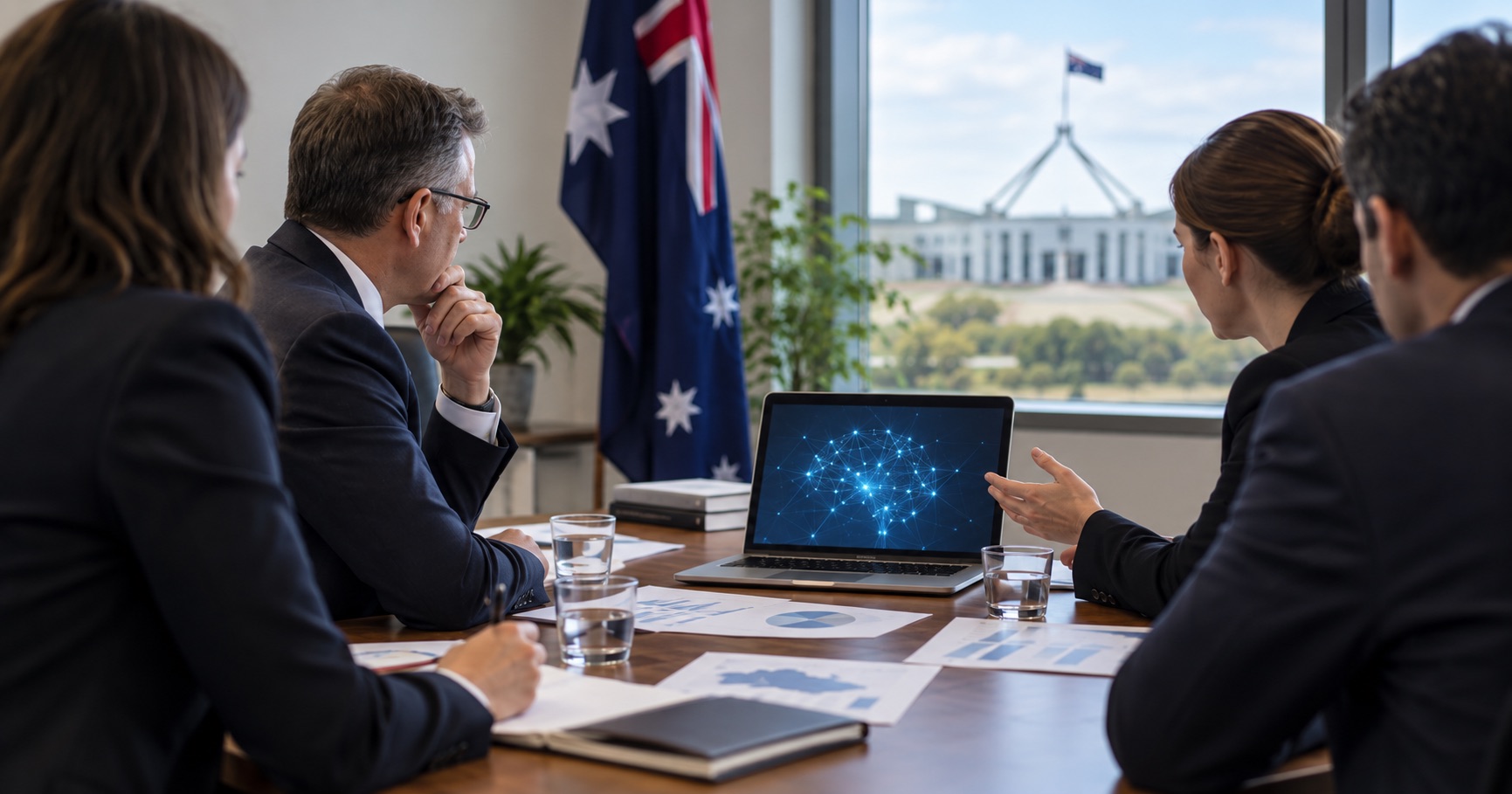
Calls for stronger AI regulation in Australia are gaining urgency after senior technology figures and researchers raised fresh concerns about the pace and safety of advanced model development.
In an opinion article for The Australian Financial Review, Australian Council of Trade Unions secretary Melissa Donnelly argued that recent warnings from AI company leaders and researchers should not be dismissed, even where those companies have commercial interests in the technology’s future.
Donnelly pointed to Dario Amodei, Sam Altman and Elon Musk as prominent technology figures who have warned that powerful AI systems are advancing quickly. She also referred to resignations and public concerns from AI researchers who believe more time is needed for outside evaluation and safety testing.
The article argues that Australia should not leave the direction of AI development solely to private technology companies. Donnelly said unions are calling for a licensing regime covering AI models, with risk mitigation duties for developers and deployers operating in Australia.
Such a regime would require continuing transparency over AI products offered in the local market. The measures described include regular safety auditing, guardrails against high-risk uses, stronger governance and mandatory reporting of major incidents.
Donnelly wrote that the natural body to administer such a system would be a strengthened Artificial Intelligence Safety Institute, which she said was created by the federal government earlier this year. She argued that the institute would need greater powers to respond to the scale of risks now being discussed by AI founders and developers.
The article links AI regulation to workplace rights, creative ownership, cultural sovereignty and business safety. Donnelly argued that creative and media workers need protections over ownership, use, pricing and value of their work. She also said Indigenous cultural and intellectual property should be protected from theft and appropriation.
The risks identified in the article include AI-generated child sexual abuse material, sexual harassment, misinformation, disinformation, cyberattacks on critical infrastructure and threats to important businesses.
Donnelly also referred to Anthropic publishing efforts to disrupt malicious uses such as potential bioweapon development, while arguing that companies should not be left to regulate themselves.
The article also cited OpenAI’s failure to govern a swarm of agents, which Donnelly linked to the Hugging Face attack. She said the incident raised questions about safety protocols and governance.
For Australian businesses, the debate points to a growing compliance and governance challenge. AI adoption is no longer only about productivity gains, automation or software choice. It increasingly involves privacy, cyber resilience, workforce impact, content ownership and accountability for how AI systems are deployed.
Donnelly argued that Australia should work with peer democracies on effective AI regulation rather than relying on decisions made in the United States or by large technology companies.
The article presents AI licensing as a way to require developers to prove that safety steps have been taken before profiting from Australian users. For companies using AI tools, that suggests future regulation may place greater emphasis on auditability, risk controls and responsible deployment across workplaces and digital services.
SOURCE ATTRIBUTION:
Based on opinion by Melissa Donnelly for The Australian Financial Review, published Thursday 17 September 2026.